What is a twitten? Brighton's narrow alleys explained
A twitten is the Sussex word for a narrow passage between buildings, and it is the reason the Lanes are called the Lanes.
By Only Brighton Editorial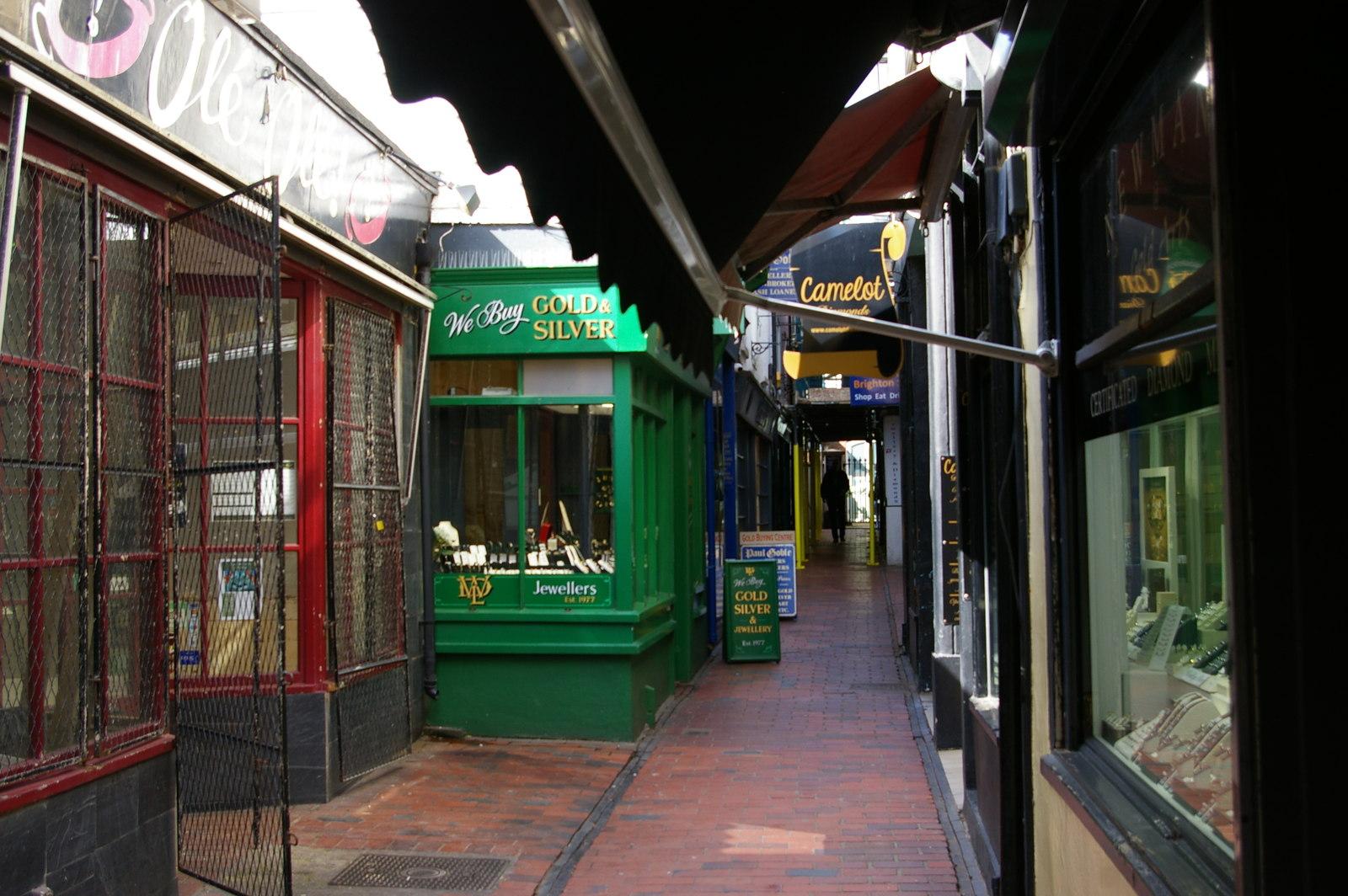
Ask a Londoner what you call a narrow path between two walls and you will get "alley". Ask someone from Glasgow and it might be a "close". Ask someone from Brighton and, if they have been here long enough, you will get twitten. It is one of those words that marks you out as local the moment you use it, and it is worth knowing before you set off to wander.
What a twitten actually is
Twitten is an old Sussex dialect word, used in both East and West Sussex, for a small passageway between two buildings. These passages lead on to courtyards, streets or open ground behind. A second reference work defines it as a narrow path between two walls or hedges, usually opening into a courtyard, a street or an open area. In other words, a cut-through that looks too small to be a proper street, and often is.
You will not find twittens only in Brighton. The word is still used in Lewes and Cuckfield too, and one dictionary example describes the Lewes ones as steep alleyways with high walls between old buildings. But Brighton has plenty, and the city has given the word a good deal of its modern life.
Where the word comes from
Nobody is quite sure. One suggestion, recorded by a local community history site, is that it grew out of "betwixt" and "between", which suits a passage that exists purely in the gap between two buildings. The word dates from the early 19th century and may be related to the Low German twiete, meaning an alley or lane. A Shoreham dialect page gives an Old English form, twiten, and points to the Rev. W. D. Parish and his Dictionary of the Sussex Dialect.
So the honest answer is a shrug with some good candidates. It is a fine thing to say with confidence at a pub quiz, provided you say "it may be".
Why the Lanes are called the Lanes
Here is the link most visitors never make. According to Restaurants Brighton, the Lanes take their name from narrow alleyways once known locally as twittens, which have threaded through this part of the city since it was called Brighthelmstone. Visit Brighton says some of the Lanes alleyways, "twittens as they're known locally", feel even older than the rest of the area.
That means the whole district is, in a sense, named after the thing you walk through to get from one bit of it to the next. When the street plan feels like a maze, that is the old fishing village still doing its work. The Lanes sit in the Old Town, close to the seafront end of the city, and the twisting layout is exactly what you came for. Put the map away for a bit.
Not to be confused with North Laine
A common mix up, and an easy one to make. The "laine" in North Laine is a different Sussex word altogether, meaning a field or tract of land. It has nothing to do with lanes or twittens, even though the two areas sit side by side and the spelling invites the confusion. A piece on Glossophilia sets out the difference neatly, and notes that both "twitten" and "laine" are Sussex words still in use in Brighton, Lewes and Cuckfield.
Handy rule: a twitten is a passage, a laine is a patch of ground. If someone tells you North Laine is named after its alleys, you can politely correct them.
Catcreeps and other words
Twitten has a relative. Visit Brighton's shopping guide talks about "twittens and catcreeps" in the shopping areas, where antiques, jewellery and boutique fashion are tucked into the narrow ways. The point is that Brighton does not have one word for these little passages, it has a small family of them, and the shops that line them are part of the appeal.
How to look for them
- In the Lanes: follow the passages that seem too narrow to lead anywhere. Many do lead somewhere, and the odd turn is the whole idea.
- In the shopping streets: look for the gaps between shopfronts. Independent boutiques and antiques sellers often sit in the side passages rather than on the main frontage.
- On the map: a community site called the Brighton Alley Project catalogues the alleys, passages, stairways and cut-throughs of Brighton, Hove and Lewes, if you want a longer list to work through.
Keep the word in your pocket too. Use it correctly and a local will nod. Use it to describe an ordinary pavement and they will give you a look.
The stories behind individual alley names are a separate rabbit hole, and a good one. For now, the thing to remember is simple: in Brighton the twitten came first, and the Lanes were named after it.